Grill-It-Yourself BBQ, such as Japanese yakiniku and Korean BBQ,
is a style of dining where guests grill bite-sized slices of beef and pork themselves at the table.
This dining style has been growing in popularity across the United States in recent years.
Below, we explain why Grill-It-Yourself BBQ is gaining popularity.
Reason 1: The biggest reason for its popularity is that you can enjoy your favorite ingredients in bite-sized portions, whenever you want.
“Whenever You Want”:
Simply pick the ingredients you want from your plate and place them on the grill. In about 2–4 minutes, depending on the cut and thickness, you can enjoy your meat hot off the grill. Thin, bite-sized slices cook quickly, so you can savor freshly grilled meat at its best—far more delicious than meat that has cooled and become tough.
“Your Favorite Ingredients”:
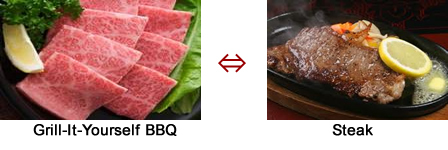
With Japanese yakiniku, you can enjoy a variety of cuts—from kalbi (short ribs) to loin, skirt steak, and beef tongue. With Korean BBQ, you can explore samgyeopsal (pork belly), moksal (pork collar), yangnyeom galbi (marinated beef short ribs), and bulgogi (beef marinated in a sweet and savory sauce). You can also try several different dipping sauces.
In addition to beef BBQ, our KTEL grill can be used to prepare okonomiyaki, shabu-shabu, and sukiyaki, accommodating a wide range of tastes within your group.

60~120 sec

60~120 sec

60~90 sec

60~120 sec

50~90 sec

50~90 sec

50~90 sec

60~90 sec

50~70 sec
Reason 2: The Fun and Flavor of Grilling Your Own Meat.
You can grill your meat just the way you like it while improving your grilling skills. Become a BBQ master and delight your friends or partner with compliments like, “Your BBQ tastes amazing!” Grilling for your guests right at the table is also a wonderful way to make them feel special on celebratory occasions.
Reason 3: Improving operational efficiency and reducing labor.
Even during busy lunch hours and weekend dinners, restaurants can operate efficiently with fewer chefs and servers, improving operational efficiency and reducing labor costs.